
Disclosure: This article contains affiliate links. If you click through and make a purchase, FitScout HQ may earn a small commission at no extra cost to you. We only recommend gear we genuinely think is worth your money. Thanks for supporting the site.
Things to Consider Before Building a Home Gym
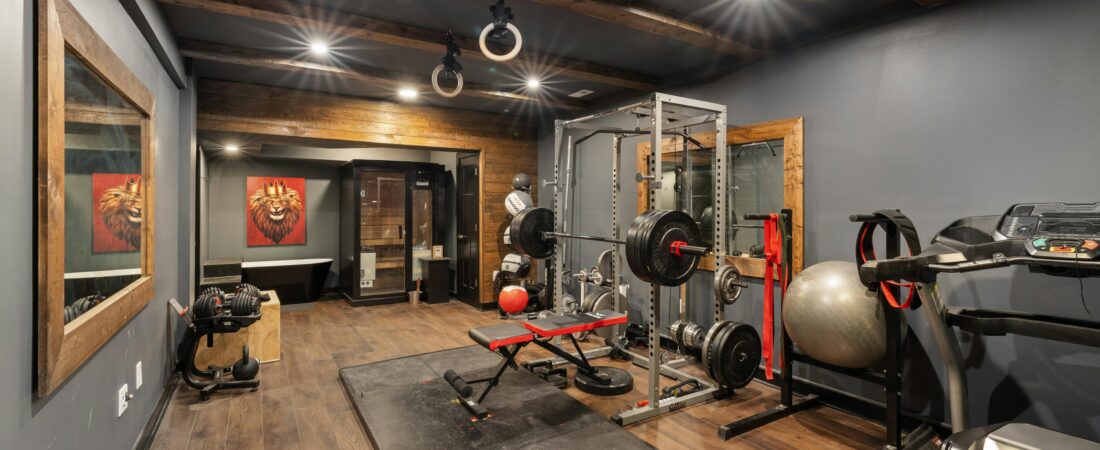
Picture this: it’s 5:47 a.m., it’s pouring rain, and instead of scraping ice off a windshield to drive to a crowded chain gym, you walk twelve feet into a quiet, well-lit space that’s entirely yours. That’s the dream most people are chasing when they start building a home gym. The reality, though? It can either deliver exactly that or turn into a $3,000 graveyard of unused equipment shoved into a corner of the basement.
The difference comes down to what you decide before you start clicking “Add to Cart.” This guide walks through the practical considerations that actually matter — space, flooring, training style, storage, atmosphere, and budget — and pairs each one with gear that earns its footprint. No fluff, no “you need everything.” Just the real stuff.
1. Get Honest About Your Space (Before You Buy a Single Thing)
Square footage is the single biggest constraint people underestimate. A power rack with a 7-foot pull-up bar has a real footprint of roughly 4 ft × 5 ft, sure — but you also need pull-out clearance for the bar, lifting room around the rack, and ceiling height that won’t decapitate you on a press. Eight-foot ceilings are tight for any standing overhead work; nine feet is comfortable.
Grab a tape measure and map your room on paper. Mark windows, outlets, doorways, and HVAC vents. Then add the equipment outlines at scale. You’ll quickly see whether a rack-and-bench setup fits or whether you need to think more vertically. A ACSM-style functional approach — train movements, not machines — pairs well with smaller spaces because you can do far more with less.
Apartment dweller? Wall and door damage become real concerns. Our breakdown of no-damage pull-up bar setups for apartments and rentals walks through what works without losing your security deposit.
2. Sort Out Flooring First — Yes, Really
Flooring is the one decision people skip and immediately regret. Dropping a 45-pound dumbbell on a concrete slab cracks the slab and dents the dumbbell. Dropping it on hardwood through a yoga mat ruins the floor underneath. Proper rubber flooring solves three problems at once: it protects the subfloor, dampens sound (your downstairs neighbors will thank you), and gives you a stable surface for lifting.
Eight-millimeter interlocking rubber tiles are the sweet spot for most home setups. They’re thick enough to handle dumbbells and machines, thin enough to avoid an obvious “raised floor” look, and easy to install one tile at a time without tools.
IncStores 8mm Strong Rubber Interlocking Floor Tiles
Why it works: Recycled rubber, dedicated center/border/corner pieces for a clean edge, low odor compared to cheap mats. Waterproof, slip-resistant, and rated for heavy equipment. Tiles install without adhesive, which matters if you ever move the gym.
Heads up: Buy enough to cover at least the lifting zone (around 6 ft × 8 ft). You can always expand later.
3. Match Your Equipment to How You Actually Train
This is where most home gyms go sideways. Someone watches a YouTube video about kettlebell flows, buys six kettlebells, and never touches them again because they actually prefer barbell work. Be ruthlessly honest: when you’ve trained consistently in the past, what did you reach for?
Three rough archetypes cover most lifters:
- The strength-and-physique lifter — barbell squats, presses, rows, deadlifts. Needs a rack, a bench, a barbell, and plates.
- The minimalist or traveler — bodyweight, dumbbells, bands. Wants gear that stores under a bed.
- The hybrid athlete — mixes lifting with conditioning, intervals, maybe rowing or cycling.
Each archetype calls for a different starting build. Skip ahead to the category that matches you and ignore the rest. There’s no “complete” home gym checklist that applies to everyone.
For the Strength Lifter: A Power Cage Anchors Everything
If you plan to barbell squat, bench press, or do any heavy overhead work alone, a power cage isn’t optional — it’s a safety device. Spotter arms catch the bar when something goes wrong, which is the only reason solo heavy lifting is reasonable in the first place.
Fitness Reality 810XLT Super Max Power Cage
Why it works: 800-lb tested capacity, 2″x2″ tubular steel, 19 height settings on the safety bars, and a multi-grip pull-up bar overhead. Walk-in design gives you proper room for squats and presses. ASTM-certified, which not every budget cage can claim.
Heads up: You’ll still need a barbell, plates, and a bench separately. Plan accordingly.
Pair the cage with an adjustable bench. Flat-only benches age out of your routine the moment you want to incline press or do seated dumbbell work. A folding adjustable bench gives you flat, incline, and decline positions and tucks against a wall when you’re done.
FLYBIRD WB3 Adjustable Weight Bench
Why it works: 750-lb capacity, fits lifters up to 6’5″, folds flat for storage, and weighs only 27 pounds for easy repositioning. Multiple incline and decline angles cover everything from chest pressing to seated curls.
Heads up: Foldable benches have a slight wiggle compared to fixed commercial gym benches. The trade-off is worth it for the storage.
For the Minimalist: Adjustable Dumbbells Pull Their Weight
One of the smartest space-savers in home fitness is a single pair of adjustable dumbbells that replaces an entire rack. The dial-style design lets you swap from 5 lbs to 52.5 lbs in a few seconds, which is enough range for almost anyone who isn’t competing in powerlifting.
Bowflex SelectTech 552 Adjustable Dumbbells
Why it works: One pair replaces 15 sets of dumbbells. Footprint is roughly the size of a shoebox per dumbbell. The metal locking system has been refined across multiple revisions, and the current Results Series uses reinforced metal plates.
Heads up: Don’t drop them. The mechanism that makes them adjustable is the same mechanism that doesn’t love impact. Set them down deliberately.
Bands deserve a permanent spot in any home setup, even if you primarily lift heavy. They’re brilliant for warm-ups, accessory work, and travel days. If you’re skeptical about whether bands can build real muscle, our deep-dive on whether resistance bands can replace weights for muscle growth covers what the research actually shows.
Bodylastics PRO Series Resistance Band Set
Why it works: Seven stackable bands ranging from 10 to 120 lbs of tension, totaling over 300 lbs combined. Patented snap-reduction technology, ergonomic handles, ankle straps, and a door anchor that turns any room into a cable-machine substitute.
Heads up: Bands wear out eventually with heavy use. Inspect them periodically for fraying — that’s true of any band.
For the Hybrid Athlete: Add Compact Cardio
Cardio at home is where shoppers waste the most money. A treadmill that lives unused in the garage isn’t doing anything for your VO2 max. Pick a modality you’ll actually use — and pick one that folds. Rowing machines hit roughly 86% of the body’s musculature in a single stroke, which is hard to argue with for time efficiency. If running is your thing instead, our breakdown of treadmills under $500 that don’t feel cheap walks through what’s worth the money and what to skip.
Sunny Health & Fitness SF-RW5515 Magnetic Rower
Why it works: Eight magnetic resistance levels, a 53-inch slide rail that accommodates lifters up to 6’8″, and a folding rail that stores upright in a closet. Quiet enough for early-morning sessions without waking the household.
Heads up: The seat padding is firm. A rower seat cushion (sold separately) is a $15 quality-of-life upgrade.
4. Plan Storage Before Equipment Multiplies
The clutter problem sneaks up on every home gym owner. Six months in, you’ve got bands draped over a doorknob, plates leaning against a wall, and dumbbells on the floor where you’ll definitely stub your toe. A dedicated rack solves this on day one and keeps your gear from looking (and acting) like a hazard.
CAP Barbell 51″ 3-Tier Dumbbell Rack
Why it works: Three angled shelves hold up to 15 pairs of dumbbells, with 144 inches of total storage space. Heavy-duty 12-gauge steel handles the abuse, and the angled shelves make grabbing weights easier than reaching down to the floor.
Heads up: Tighten all bolts after final assembly. Snug them as you go and the rack feels lopsided.
5. Don’t Overlook Lighting, Airflow, and Atmosphere
A garage with one bare bulb and stale air kills consistency faster than any equipment shortage. Three small upgrades make a disproportionate difference:
- Lighting — at least 4,000 lumens of bright, daylight-temperature LED. Dim spaces feel like dungeons and your training will reflect that.
- Airflow — a box fan or wall-mounted fan keeps you cool and prevents the stagnant-air feeling that makes 30-minute sessions feel like 90.
- Sound — a Bluetooth speaker is non-negotiable. Even a $40 portable model transforms the room.
A wall mirror is worth thinking about too — not for vanity, but for form. Watching your knee track during a squat or your hips during a deadlift is one of the cheapest coaching tools you’ll ever own.
6. Be Realistic About Budget — Especially the Hidden Costs
Sticker price isn’t the only number that matters. Here’s the realistic budget breakdown most people miss when building a home gym:
- Flooring — $200 to $800 depending on coverage area
- Strength foundation (rack + bench + barbell + plates) — $700 to $1,500
- Versatile weights (adjustable dumbbells or sets) — $300 to $750
- Cardio (rower, bike, or treadmill) — $300 to $1,500
- Accessories (bands, mat, foam roller, mirror, fan) — $150 to $400
- Maintenance and replacement — budget roughly 10% of your initial cost annually
That last line is the one nobody talks about. Bands stretch out, cables fray, dumbbell handles wear, and treadmill belts need replacement. A home gym isn’t free after the upfront purchase — it’s just cheaper than a $60-a-month membership over a five-year horizon.
Tracking your training is the other ongoing investment that quietly improves your results. A purpose-built lifting tracker beats the generic step-counter on your wrist; we cover what to look for in our roundup of the best fitness trackers for weightlifting (not just cardio).
7. Mistakes to Avoid When Building Your First Setup
Here’s where almost every first-timer trips up:
- Buying a “complete” gym package — these multi-station machines look impressive in marketing photos but rarely match the versatility of a barbell, bench, and dumbbell setup at the same price.
- Skipping flooring — see section 2. The damage is real.
- Forgetting to measure ceiling height — a 7-foot pull-up bar in a basement with 6’10” ceilings means you’ll be ducking forever.
- Ignoring electrical needs — treadmills, fans, and lights all draw power. Make sure your circuit can handle it.
- Overspending on day one — start with a minimum viable setup. Add gear as your training evolves.
Frequently Asked Questions
How much space do I need for a basic home gym?
A functional home gym fits in roughly 50 to 80 square feet (around 7 ft × 10 ft). That accommodates a power rack, bench, dumbbells, and standing room for compound lifts. Apartment-friendly setups can run on as little as 25 square feet using bands, adjustable dumbbells, and bodyweight movements.
What’s the single most important thing to buy first?
Flooring. It protects your subfloor, dampens noise, and gives you a stable training surface. Everything else can wait or be added gradually — but if you start lifting on bare concrete or hardwood, you’ll regret it within a month.
Is a home gym actually cheaper than a gym membership?
Long term, yes. A $1,500 home gym pays for itself in about two years compared to a $60/month membership, and that’s before you factor in commute time and gas. The break-even point depends on what you buy and how often you’d otherwise drive to a commercial gym.
Can I build a home gym without a garage or basement?
Absolutely. Plenty of effective home setups live in spare bedrooms, finished basements, or even balconies (in mild climates). The key is choosing equipment that matches your space — adjustable dumbbells, bands, a folding bench, and a doorway pull-up bar can deliver a serious training stimulus without a dedicated room.
How long does it take to build a home gym from scratch?
Plan on a weekend for delivery and assembly if you’ve ordered everything at once. Power racks typically take two people 60 to 90 minutes to assemble, benches take 20 to 30 minutes, and flooring goes down in roughly an hour for a 60-square-foot area. The bigger time investment is research — which is exactly what you’re doing right now.
Final Thoughts on Building a Home Gym That Lasts
A home gym you’ll actually use is built around three things: realistic space planning, equipment that matches your training style, and an environment that makes you want to walk in there. Skip any of those, and even the most expensive gear becomes decoration.
The best advice I can give? Start smaller than you think you need to. Buy flooring, a rack or a quality pair of adjustable dumbbells, a bench, and a band set. Train consistently for 90 days. Then add what’s missing based on what your training has actually demanded — not what looked cool on Instagram. Building a home gym isn’t a one-weekend project; it’s a slow build that gets better the longer you stay with it. The lifters who treat it that way are the ones still using their gym five years later.
Prices, availability, and product specifications were accurate at the time of writing. Always verify current pricing and stock on Amazon before purchasing.