Affiliate Disclosure: FitScout HQ is a participant in the Amazon Services LLC Associates Program. We may earn a small commission when you buy through links on this page — at zero cost to you. We only recommend gear we’d genuinely sleep on ourselves.
You can hammer the gym, hit your protein, and still wake up feeling like you went ten rounds with a mattress. The fix is rarely another supplement — it’s how your body is positioned for the seven to nine hours your muscles spend rebuilding themselves. Picking the best sleep positions for muscle recovery changes how blood reaches sore tissue, how your spine decompresses, and how much deep sleep you actually clock.
This guide breaks down the four sleep positions that lifters, runners, and weekend warriors should know cold, ranks them by recovery payoff, and matches each one to the specific gear that locks your body in place all night. Every Amazon product mentioned has been hand-picked for in-stock availability and recovery-specific use — no random pillow padding here.
Why Sleep Position Matters More Than Most People Realize
Muscle growth doesn’t happen on the squat rack — it happens between roughly 11 p.m. and 6 a.m., when your pituitary gland dumps growth hormone into your bloodstream during deep, slow-wave sleep. The body uses that window to patch the micro-tears your training session created.
Here’s the catch: that repair process needs circulation. Sleep specialists at the National Sleep Center point out that twisted positions pinch blood vessels and compress arteries, which throttles the oxygen and nutrient flow your sore quads desperately need. Misalign your spine for eight hours and you’ve effectively held a low-grade isometric contraction in your traps and erectors all night — the opposite of recovery.
The position you fall asleep in also dictates how easily you reach those deep sleep stages. Discomfort from a pinched shoulder or a hyperextended neck triggers micro-arousals you won’t remember in the morning, but your fitness tracker will. (Speaking of which, here’s our guide to the best fitness trackers for weightlifting if you want to actually measure what your sleep is doing.)
The 4 Sleep Positions, Ranked for Muscle Recovery
1. Supine (Back) with Knees Slightly Elevated — The Recovery Gold Standard
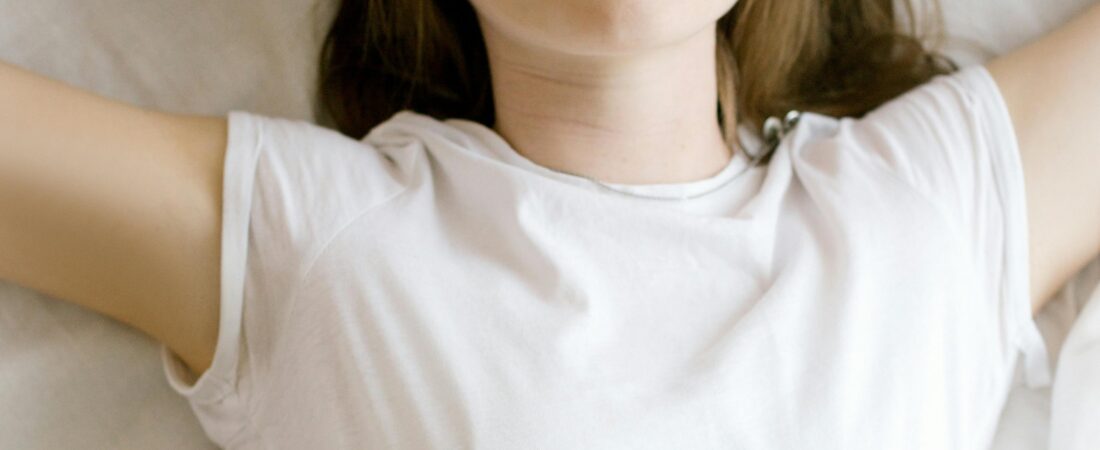
Sleeping flat on your back with a small bolster under the knees is the position physiotherapists prescribe to athletes recovering from heavy training blocks. Your spine sits in neutral, body weight distributes across the largest possible surface area, and venous return to the heart improves dramatically when the legs are propped 4–8 inches up.
Translation for lifters: less lower-back compression after deadlift day, less pooling in fatigued calves after a long run, and zero shoulder impingement.
Drawback: If you snore or have suspected sleep apnea, back sleeping can worsen airway collapse. Get tested before defaulting to this position nightly.
2. Stacked Side Sleeping (Non-Dominant Side) — A Strong Plan B
Sports sleep coach Nick Littlehales — the guy who works with Cristiano Ronaldo and several Premier League squads — recommends side sleeping on your non-dominant side (left side for righties). The fetal-leaning version takes pressure off the lumbar spine and is the safest position for anyone with reflux, snoring, or pregnancy considerations.
The rules: keep knees stacked (not crossed), spine straight from skull to tailbone, and pop a pillow between the knees so your top leg doesn’t drop forward and torque your hips.
3. Modified Side with Body Pillow — Best for Hip and Shoulder Issues
If side sleeping leaves you waking up with a cranky shoulder or aching IT band, hugging a full-length body pillow distributes weight across the chest and arm while keeping the top leg from collapsing inward. Lifters with broad shoulders especially benefit — the body pillow fills the gap your shoulder otherwise has to brace against.
4. Stomach Sleeping — Skip It If You Can
Quick reality check: prone sleeping is the worst position for recovery, full stop. Your neck rotates 90 degrees for hours, the lumbar spine hyperextends, and the chest compresses against the mattress, restricting breathing. Athletes who only sleep this way often report chronic neck stiffness and tight hip flexors that no amount of stretching seems to fix.
If you’re a lifelong stomach sleeper, transition gradually — more on that below.
What to Look for in Sleep Recovery Gear
Not every pillow earns its place in a recovery setup. Whether you’re back sleeping or side sleeping, the gear has to do three things: maintain neutral spine alignment, relieve pressure on heavy joints, and stay cool enough that you don’t wake up sweating. Here’s what actually matters when you shop:
- Adjustable loft. Shoulder width and head size vary wildly. Pillows with add-or-remove fill let you dial in the height instead of forcing your neck into a one-size-fits-nobody angle.
- Memory foam density. Cheap shredded foam flattens within months. Look for high-density polyurethane or cross-cut memory foam that bounces back after compression.
- Breathable, washable covers. Sweating during sleep is a recovery killer — it spikes cortisol and shortens REM. Mesh or bamboo-rayon blends beat polyester.
- Certified materials. CertiPUR-US and GREENGUARD Gold certifications mean the foam isn’t off-gassing chemicals near your face for the next three years.
- Position-specific shape. A contour cervical pillow does a different job than an adjustable shredded-fill pillow. Match the shape to how you actually sleep, not how you wish you slept.
The 6 Best Products for Sleep Position Recovery (2026)
1. Coop Home Goods Original Adjustable Pillow — Best All-Around Head Pillow
The Coop Original is the gear that won me over on adjustable-fill pillows. It ships overstuffed, comes with an extra bag of cross-cut memory-foam-and-microfiber blend (Coop calls it Oomph Fill), and lets you unzip the cover to add or remove fill until your neck sits dead-level with your spine. CertiPUR-US and GREENGUARD Gold certified, machine-washable Lulltra cover, and it works whether you sleep on your back, side, or rotate between both.
Lifters with thicker traps tend to need extra fill; runners and lighter-framed athletes usually pull some out. Either way, you get a pillow tuned to your shoulder width — which is the entire game for spinal alignment.
Pros: Fully adjustable loft, certified safe foam, washable cover, 100-night trial through Coop, holds shape for years.
Cons: Memory foam smell on first unboxing (airs out in a day), sleeps slightly warm if you run hot.
2. EPABO Contour Memory Foam Pillow — Best for Cervical Support
If you wake up with neck pain that no amount of stretching fixes, the EPABO contour pillow is built for you. It uses an ergonomic dual-height contour design — taller side for side sleepers, lower side for back sleepers — that cradles the cervical curve instead of letting your head flop. The breathable memory foam doesn’t trap heat the way bargain-bin contour pillows do, and the included rayon-blend pillowcase feels surprisingly silky for the price point.
Athletes who do a lot of overhead work — swimmers, climbers, anyone with cranky rotator cuffs — tend to see the biggest payoff here because the contour stops the head from drifting back and pinching the brachial nerves.
Pros: Targeted cervical support, dual-height design, washable cover, removable foam piece to lower the loft if needed.
Cons: Requires a 1–2 week adjustment period, firmer than a typical pillow (that’s the point, but it’s not for everyone).
3. Coop Home Goods Adjustable Body Pillow — Best for Side Sleepers
A 20″ x 54″ full-length body pillow built on the same Oomph Fill platform as Coop’s original. Side sleepers wrap one arm and one leg around it, which keeps the top shoulder from rolling forward and the top hip from internally rotating overnight. Adjustable fill means you can make it firm enough to support a 200-lb lifter or soft enough for a smaller frame.
It also pulls double duty as a back-sleeper bolster if you flip it diagonally under your knees. For the price of one good cervical pillow, you’re getting a tool that solves two of the three positional problems athletes deal with.
Pros: Adjustable fill, generous 54″ length covers head-to-knee, machine-washable cover, doubles as a knee elevator.
Cons: Takes up real estate in the bed (couples take note), needs a few days to fully loft after unboxing.
4. ComfiLife Orthopedic Knee Pillow — Best Between-the-Knees Pillow
If a body pillow feels like overkill but you still need to keep your knees stacked, this is the surgical strike option. The ComfiLife is a contoured, wedge-shaped piece of high-density polyurethane foam sized perfectly between the knees for side sleepers. It stops the top leg from collapsing forward — which is what wrenches the lower spine and torques the SI joint while you sleep.
Chiropractors and physical therapists routinely recommend this exact pillow for clients dealing with sciatica, hip pain, or post-leg-day soreness. At under $35, it’s the lowest-cost upgrade on this list with the highest “wait, my hips don’t hurt anymore” payoff.
Pros: Compact, ergonomic contour, breathable zippered cover, holds shape long-term, lifetime guarantee from ComfiLife.
Cons: Single-purpose (no use for back sleepers), takes a couple of nights to get used to.
5. Cushy Form 8-Inch Leg Elevation Pillow — Best Wedge for Back Sleepers
This is the gear that turns back sleeping from “okay” into “holy hell my legs feel light again.” The Cushy Form wedge is an 8-inch memory foam ramp designed to elevate the legs above heart level — exactly what sports doctors recommend for venous return, swelling reduction in the lower legs, and post-leg-day recovery.
Endurance athletes who finish long runs at the end of the day will feel the difference within a single night. The wedge keeps blood from pooling in the calves and ankles, which means less DOMS and faster bounce-back the next morning. Shape holds up over time, the cover unzips for washing, and the foam doesn’t sag the way cheap wedges do.
Pros: Reduces lower-leg swelling, supports back-sleeping recovery posture, removable washable cover, holds shape under repeated weight.
Cons: Bulky to store, not ideal for combo sleepers who roll a lot at night.
6. YnM 15 lbs Weighted Blanket — Best for Sleep-Onset and Deeper Slow-Wave Sleep
Sleep position is half the battle. The other half is actually reaching deep sleep, which is when your body releases growth hormone and rebuilds tissue. The YnM weighted blanket uses 15 pounds of distributed pressure (deep-touch stimulation) to drop your nervous system out of sympathetic mode and into parasympathetic recovery mode. Translation: you fall asleep faster and stay in slow-wave sleep longer.
Pick the weight using the standard formula — roughly 10% of body weight plus a pound. The 7-layer construction with cooling glass beads keeps it from sleeping hot, and the 2×2-inch compartments distribute weight evenly so it doesn’t bunch up at your feet.
Pros: Promotes faster sleep onset, deeper slow-wave sleep, cooling glass-bead construction, multiple weight and color options.
Cons: Heavy to wash (use a duvet cover), not recommended for anyone with circulation or respiratory conditions without a doctor’s okay.
Quick Comparison Table
| Product | Best For | Key Feature | Price Range |
|---|---|---|---|
| Coop Home Goods Original | All sleepers | Adjustable loft | $$ |
| EPABO Contour | Neck pain sufferers | Dual-height contour | $ |
| Coop Body Pillow | Side sleepers | Full-body alignment | $$$ |
| ComfiLife Knee Pillow | Side sleepers w/ hip pain | Contoured between-knee | $ |
| Cushy Form Wedge | Back sleepers | 8-inch leg elevation | $$ |
| YnM Weighted Blanket | Sleep onset / deep sleep | 15 lb deep-touch pressure | $$ |
How to Actually Train Yourself Into a Better Sleep Position
You can buy every pillow on this list and still wake up on your stomach if you don’t address the habit. Sleep posture is just that — a habit, and habits respond to deliberate retraining over roughly 2–4 weeks.
The trick most physical therapists use is the “barricade” method: stack pillows on whichever side you don’t want to roll toward. Stomach sleepers transitioning to back sleeping place body pillows on both sides of the torso, which physically blocks the roll. Side sleepers protecting their non-dominant side wedge a pillow behind the back so flipping mid-sleep wakes them up.
Combine the barricade with a leg-elevation wedge under the knees and you’ve engineered a position your sleeping brain can’t easily escape. Within 10–14 nights, the new position starts to feel like home — and the old position feels weirdly uncomfortable.
If you’re already managing recovery on multiple fronts, you’ll appreciate how this stacks with smarter training volume. We covered that in our piece on short workouts vs. long workouts and how recovery-friendly bands work in our resistance bands breakdown.
Keep Building Your Recovery Stack
Sleep is one piece. Here’s the rest of the FitScout HQ recovery and home-training library:
- Best Fitness Trackers for Weightlifting — measure your sleep stages and HRV
- Best Beginner Home Gym Setup — build a training space you’ll actually use
- Short Workouts vs. Long Workouts — train smarter, recover faster
- AI Workout Apps vs. Personal Trainers — programming that respects your recovery
- Can Resistance Bands Replace Weights for Muscle Growth?
- Gym Membership vs. Home Gym Cost Breakdown
Frequently Asked Questions
What is the best sleep position for muscle recovery?
Back sleeping with the knees slightly elevated is widely recommended by sports physiotherapists as the best sleep position for muscle recovery. It keeps the spine neutral, distributes body weight across the largest area, and improves venous return — meaning more oxygen and nutrients reach sore muscles overnight.
Is sleeping on your stomach really that bad for recovery?
Yes. Stomach sleeping forces the neck into a 90-degree rotation for hours, hyperextends the lumbar spine, and compresses the chest. Athletes who sleep prone often deal with chronic neck stiffness, tight hip flexors, and shallower breathing — all of which interfere with deep sleep and tissue repair.
How long does it take to retrain a sleep position?
Most people adapt to a new sleep position within 2–4 weeks of consistent practice. Using a body pillow or wedge as a physical “barricade” speeds up the process by blocking the roll back to your old habit. Expect some restlessness for the first 7–10 nights.
Do weighted blankets actually help muscle recovery?
Indirectly, yes. Weighted blankets use deep-touch pressure to shift the nervous system from sympathetic (fight-or-flight) to parasympathetic (rest-and-digest) mode, which speeds sleep onset and deepens slow-wave sleep. Slow-wave sleep is when growth hormone is released, so a deeper sleep stage means more recovery time per night.
Should I use a knee pillow if I sleep on my back?
A small bolster or rolled towel under the knees benefits back sleepers by reducing lower-back compression. A traditional between-the-knee pillow is shaped for side sleepers — back sleepers get more value from a leg-elevation wedge that lifts both legs together.
Can the wrong pillow really cause muscle soreness?
It can. A pillow with the wrong loft forces your neck into hours of sustained side-bending or rotation, which can radiate into the traps, rhomboids, and even down into the lower back. Lifters who wake up with mystery shoulder soreness on rest days are often dealing with a pillow problem, not a training problem.
Final Word
Recovery isn’t passive. The eight hours you’re horizontal each night either rebuild your training adaptations or sabotage them, and the deciding factor is usually how your body is positioned and supported. The best sleep positions for muscle recovery — back-with-elevated-knees and stacked side sleeping — only work as well as the gear holding you in place. Pick the position that fits your physiology, gear up with the pillows and wedges that lock it in, and treat sleep like the recovery session it actually is.
Your next PR is more likely to come from a smarter pillow setup than from another pre-workout. Wake up rebuilt, not wrecked.
Affiliate Disclosure: As an Amazon Associate, FitScout HQ earns from qualifying purchases. The recommendations on this page are based on independent research and product testing — buying through our links costs you nothing extra and helps fund more guides like this one.