Disclosure: As an Amazon Associate, Fit Scout HQ earns from qualifying purchases. All picks reflect our honest testing and research.
AI Workout Apps vs Personal Trainers: The Honest 2026 Breakdown
The debate around AI workout apps vs personal trainers has changed fast. Three years ago, most fitness apps barely counted reps. Today, they analyze your movement on camera, auto-adjust loads mid-set, and flag overtraining before you feel it. Yet nothing quite matches a real coach counting down your last rep while you want to quit.
So which one actually wins your time, money, and results? Honestly, it depends on what you value most. This guide cuts through the marketing noise, compares the real trade-offs, and highlights the AI-powered fitness gear on Amazon that’s worth the spend this year.
What AI Workout Apps Actually Do in 2026
Modern AI workout apps handle three jobs that used to cost $80 an hour: programming, recovery analysis, and real-time coaching. Their algorithms read your heart rate trends, strain scores, and sleep metrics. Then they rewrite tomorrow’s session before you even wake up.
Some platforms push further. JRNY pairs with smart dumbbells and counts reps through your phone camera. Garmin Coach builds a full half-marathon plan from one goal entry. Whoop’s coach checks your HRV every morning and tells you to back off or push harder. Meanwhile, Fitbit’s AI pulls data from gym equipment over Bluetooth and warns you about overreaching.
The appeal is obvious: coaching that never sleeps, no scheduling conflicts, and roughly 5% of a trainer’s monthly cost.
What a Real Personal Trainer Brings to the Table
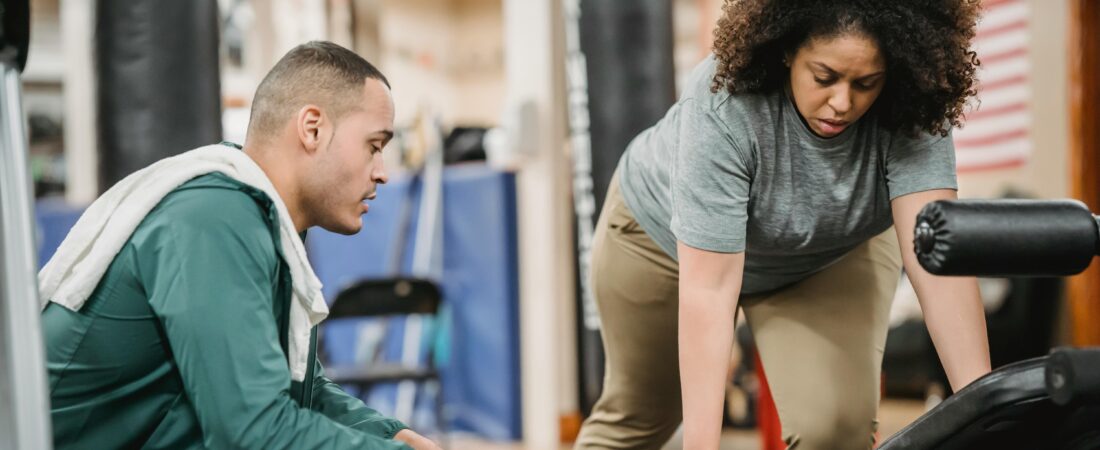
Now consider the human side. A skilled trainer catches things no camera can see. Your left shoulder drifts forward on heavy presses. You hold your breath under tension. A subtle hip shift steals power from your glute drive. Beyond form, they read the room—they know when your job stress spiked, when your sleep tanked, and when to swap deadlifts for mobility work.
Trainers also deliver accountability that algorithms can’t replicate. You’ll ghost an app notification without guilt. You won’t ghost a coach who knows your dog’s name and celebrated last week’s PR with you.
That said, quality varies wildly. A great certified trainer (ideally NSCA or ACSM credentialed) earns every dollar. A mediocre one runs you through the same canned circuit as ten other clients.
AI Workout Apps vs Personal Trainers: Head-to-Head
Let’s stack them up across the metrics that actually matter.
Cost
AI wins this round easily. Premium fitness apps run $10–$30 per month. A mid-tier trainer charges $60–$120 per session, usually twice weekly. Over a single year, you’re comparing roughly $300 to $7,000.
Personalization
Apps personalize through data—sleep, strain, steps, heart rate zones, even skin temperature. Trainers personalize through conversation, observation, and pattern recognition built over years. Apps react faster. Trainers react deeper.
Form correction
Camera-based apps now catch squat depth, bar path, and tempo errors with surprising accuracy. Still, they miss the nuance. A coach spots compensation patterns that AI won’t model convincingly for another decade.
Motivation and accountability
No app makes you feel guilty about skipping Tuesday. A trainer absolutely does. If consistency is your weakness, that social pressure often outweighs every smart feature stacked together.
Injury management
Here trainers win decisively. They regress loads on bad days, swap exercises live, and know when to refer you to a physical therapist. AI apps, for now, stick mostly to pre-programmed modifications.
Top AI-Powered Fitness Gear on Amazon (2026 Picks)
Alright, here are the Amazon picks that actually deliver on their AI promises. Each one is currently listed and widely available—though prices and stock shift constantly, so double-check before you buy.
1. Fitbit Charge 6 — Best AI Health Tracker Under $200
The Charge 6 squeezes Google’s AI health coach, six months of Fitbit Premium, built-in GPS, and gym-equipment heart rate syncing into a $100-range tracker. It’s easily the most affordable way to put daily AI coaching on your wrist. Battery runs seven days. Water resistance handles swim workouts. The whole experience feels more like a coach than a step counter.
Want a tracker tuned specifically for lifting? Our guide on the best fitness trackers for weightlifting covers stronger picks for strength-first training.
2. Garmin Venu 3 — Best AI Coaching for Serious Athletes
The Venu 3 delivers animated on-screen workouts, Body Battery energy scoring, Garmin Coach running plans, and up to 14 days of battery. Its workout benefit readouts and post-session recovery estimates rival notes from a sports scientist. If you train for distance, strength, or both, the Venu 3 handles it without flinching.
3. WHOOP 4.0 — Best AI Recovery and Strain Coach
Whoop built its reputation on 24/7 recovery science, and the 4.0 remains the standout for data-driven coaching. It tracks HRV, sleep architecture, skin temperature, and daily strain, then delivers morning guidance you’ll actually follow. The first year of membership ships with the hardware, making the math surprisingly fair.
Pair Whoop’s recovery data with real-world tools from our best fitness recovery gear breakdown to close the loop between data and action.
4. Bowflex SelectTech 552 Results Series — Best AI-Ready Adjustable Dumbbells
These dumbbells ship with a JRNY AI app trial that uses your phone camera to count reps, flag form errors, and recommend next-session loads. One pair covers 5 to 52.5 pounds per hand, so you swap through roughly 15 weight sets without cluttering a room. For anyone building a compact, AI-ready home gym, the value here is hard to beat.
Building your gym from scratch? Start with our best beginner home gym setup under $500, which walks through the exact pieces these dumbbells pair with.
When AI Workout Apps Beat a Trainer
Pick AI-driven coaching if you:
- Stay self-motivated without outside pressure
- Care about budget (seriously care)
- Already have solid form fundamentals
- Train at odd hours, travel often, or live far from gyms
When a Human Trainer Still Wins
Hire a certified trainer if you:
- Are new to lifting and need hands-on form work
- Are coming back from an injury or surgery
- Flake without real-world accountability
- Train for a specific sport, event, or competition
Honestly, most people get the best results by blending both. Book a trainer for a focused one-month form bootcamp, then let an AI app drive programming afterward. That hybrid approach beats either option on its own.
The Final Verdict on AI Workout Apps vs Personal Trainers
The AI workout apps vs personal trainers debate doesn’t crown one winner. AI now delivers what used to cost a fortune—smart programming, recovery coaching, real-time feedback—at roughly 5% of the price. Still, no algorithm notices when you quietly skip your workout. Human accountability remains a genuinely different product.
Pick AI for efficiency, scale, and daily data insights. Pick a trainer for skill-building, injury recovery, and consistency. Or combine both for a year and watch your results compound faster than either one alone.
Want strength results without traditional weights? Our analysis of resistance bands for muscle growth covers whether you even need a loaded barbell to grow.
Frequently Asked Questions
Can AI workout apps fully replace a personal trainer?
For experienced lifters, often yes. For beginners or anyone recovering from injury, probably not yet. AI still misses form nuances that a skilled trainer catches instantly.
Which AI fitness tracker has the best coaching?
Whoop 4.0 leads for recovery and strain coaching. Garmin Venu 3 wins for structured training plans and endurance goals. Fitbit Charge 6 offers the strongest value entry point for daily AI guidance.
Are AI workout app subscriptions worth the monthly fee?
If you train three or more times weekly, absolutely. Most premium apps cost less than a single personal trainer session per month.
Do AI apps track strength training accurately?
Modern ones do. Camera-based apps like JRNY count reps visually, and wrist trackers now auto-detect strength sessions through heart rate patterns and movement signatures.
What’s the cheapest way to get AI coaching?
The Fitbit Charge 6 bundles six months of Premium and Google’s AI coach under $200, making it the most budget-friendly entry into daily AI guidance.