
Disclosure: FitScoutHQ is reader-supported. A few links below are Amazon affiliate links, so we may earn a small commission at no extra cost to you. Honestly, we only recommend gear we would sweat with ourselves.
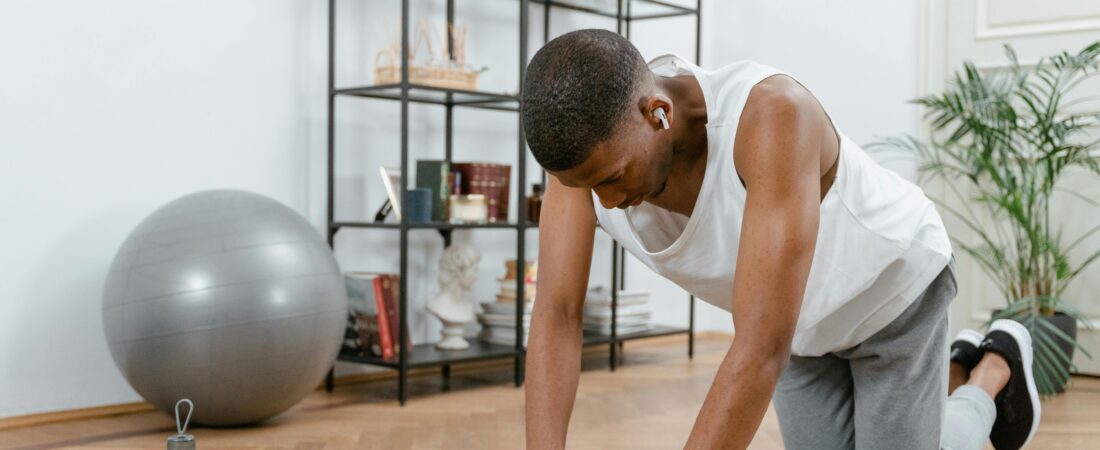
A smart at-home fat loss plan beats a fancy gym membership for most people, and you do not need a rack full of machines to prove it. With five cheap tools, a clear weekly schedule, and a bit of kitchen discipline, you can drop visible body fat inside a corner of your apartment. Moreover, there is no crowded dumbbell rack, no long commute, and no excuses disguised as traffic.
To start, this guide lays out the minimal gear that actually moves the needle, followed by a four-week plan you can run in 30–40 minutes a day. You will also get a budget breakdown, nutrition guardrails, and the quiet mistakes that stall most home cuts by week three. Let us dig in.
Why an At-Home Fat Loss Plan Quietly Outperforms the Gym
Fat loss lives and dies by consistency. A program you skip twice a week does not work, no matter how great it looks on paper. Home training kills the single biggest excuse — travel time — which is why research groups like the American Council on Exercise keep pointing to convenience as a top adherence driver.
Moreover, a tight at-home fat loss plan forces you to pick movements with the highest return: compound lifts, jump rope intervals, and kettlebell flows. You simply do not have room for the fluff. As a result, sessions get shorter, intensity climbs, and your weekly calorie burn trends up even while clock time drops.
If you are brand new to training, read our Best Beginner Home Gym Setup breakdown first. This article takes a different angle — zero fluff, fat-loss focus, and every tool under the same small budget.
How Much Space Do You Actually Need?
Clear roughly 6 by 6 feet of floor and give yourself 7 feet of ceiling clearance. That covers jump rope rotations, kettlebell swings, and full push-up range. Carpet, hardwood, and thin laminate all work — concrete floors punish your joints, so grab a thick mat if that describes your setup.
Natural light helps more than most people admit. A bright corner near a window raises adherence compared to a dim basement spot. Set up once, leave the gear visible, and your brain stops negotiating whether to train today.
The 5 Essential Tools for Your At-Home Fat Loss Plan
First, each tool below earned its place by doing two jobs well: burning calories during training and sparing muscle as you drop weight. Together, they cost less than two months of a boutique gym membership.
1. DEGOL Speed Jump Rope
Above all, jump rope is the single most underrated fat loss tool ever invented. Twenty focused minutes torches roughly 250–350 calories, hammers the calves and shoulders, and sharpens coordination as a free bonus. In addition, the DEGOL rope spins on a smooth ball-bearing system that holds up at double-under tempos, and the PVC-coated steel cable adjusts to any height in seconds. It also sits at the very top of Amazon’s jump rope bestseller list, which is rare for a tool under $15.
Furthermore, the 6-inch memory-foam handles soak up sweat and prevent the wrist fatigue that kills most jump rope habits inside a week. Pair this rope with smooth flooring or a thick mat to protect the coating.
2. WHATAFIT Stackable Resistance Bands (Set of 5)
Next, resistance bands replace an entire cable machine for less than a pizza order. The WHATAFIT kit ships with five stackable tubes, two cushioned handles, ankle straps, a door anchor, and a carry bag. In fact, stacking every band gives you roughly 150 pounds of tension — plenty for rows, presses, squats, and pull-aparts through a normal fat-loss block.
Beyond the price, bands force constant tension across every rep. That quiet feature drives more time-under-tension than dumbbells at matched loads, which helps protect muscle while calories drop. Want a deeper read on what bands can and cannot do versus iron? Our guide on whether resistance bands can replace weights for muscle growth covers the nuance.
3. Iron Gym Doorway Pull-Up Bar
Similarly, pull-ups build a wider back, thicker biceps, and more visible definition than nearly any other movement. A doorway pull-up bar delivers that value for roughly the cost of one group fitness class. The Iron Gym bar locks into any 24–32 inch frame without screws, holds up to 300 pounds, and pops off in seconds when you are done.
Additionally, you can flip it to the floor for elevated push-ups, tricep dips, and foot-anchored sit-ups. Three grip positions (narrow, wide, neutral) let you rotate stimulus every session — crucial for sustaining progress during a fat loss phase when systemic fatigue creeps in.
4. Yes4All Neoprene Coated Cast Iron Kettlebell
Meanwhile, one kettlebell replaces an entire rack of dumbbells for conditioning work. Swings, goblet squats, cleans, and Turkish get-ups all load the posterior chain and skyrocket heart rate inside two minutes. For example, the Yes4All bell uses a solid cast iron core with a neoprene coat that protects floors, dampens sound, and resists chipping — a real consideration if you train in an apartment.
Start with 15–20 lb if you are new to ballistic movements, or 25–35 lb if you already lift. The flat base lets you park it on any floor between sets or use it as a plyometric platform for renegade rows. Furthermore, unlike adjustable dumbbells, there are no moving parts to break. Curious about the dumbbell-versus-kettlebell debate? See our breakdown of adjustable dumbbells vs a full rack.
5. Amazon Basics Extra Thick Exercise Mat
Finally, a half-inch of dense foam separates a lean core from a cranky lower back. This mat stretches 74 inches long, which fits most lifters up to 6’2″, and includes a carry strap for storage under a couch. Moreover, it grips hardwood without sliding, absorbs impact during mountain climbers, and doubles as a jump rope landing zone.
Above all, the mat cushions the knees during lunges and kettlebell floor presses. Budget mats flatten inside a month under that kind of load — this one holds up for years.
Budget Snapshot: What the Minimal Setup Really Costs
Here is a rough spend breakdown. Prices shift with Amazon deals, so treat these as ballpark numbers rather than receipts.
| Tool | Primary Role | Estimated Price |
|---|---|---|
| DEGOL Speed Jump Rope | Cardio & conditioning | $10–$15 |
| WHATAFIT Resistance Band Set | Full-body strength | $25–$40 |
| Iron Gym Pull-Up Bar | Upper body pulling | $30–$45 |
| Yes4All Kettlebell (20 lb) | Total-body power | $40–$65 |
| Amazon Basics Exercise Mat | Floor work & cushioning | $25–$35 |
| Total | Full at-home fat loss kit | ≈ $130–$200 |
Put differently, two months of a typical commercial gym covers the entire setup. After that, every workout is free.
The 4-Week At-Home Fat Loss Plan
In short, four weeks is enough time to drop 4–8 pounds of fat, sharpen conditioning, and lock in the habit. Therefore, run this schedule five days a week and keep weekends for walks, recovery, or light mobility.
- Monday — Full-Body Strength: Goblet squats (kettlebell) 4×8, band rows 4×12, band chest press 3×12, pull-ups (assisted with bands if needed) 4×max, plank 3×45 sec.
- Tuesday — Jump Rope HIIT: 10 rounds of 45 seconds rope / 30 seconds rest. Finish with 3×20 band pull-aparts to decompress the shoulders.
- Wednesday — Kettlebell Conditioning: 20-minute EMOM (every minute on the minute): 10 kettlebell swings + 5 push-ups. Add bodyweight squats during rest.
- Thursday — Active Recovery: 30-minute brisk walk outside plus 10 minutes of mat-based mobility (hips, thoracic spine, hamstrings).
- Friday — Circuit Burn: 4 rounds — 60 seconds jump rope, 12 goblet squats, 10 band rows, 8 push-ups, 30 seconds plank. Minimal rest between stations.
- Saturday — Optional Cardio: 20–30 minutes of steady jump rope or a long walk. Keep the heart rate conversational.
- Sunday — Rest. Sleep in. Meal prep. Earn the week.
Track each workout inside a simple notes app and push one rep, one round, or 30 more seconds every week. Progress compounds quietly between weeks two and four.
If you prefer low-impact steady-state cardio on off days, our Best Treadmills Under $500 tests are a natural next read.
Nutrition Rules That Make or Break Your At-Home Fat Loss Plan
First, training burns fat during the session. Then, nutrition decides whether that fat actually comes off the scale. In total, these four rules handle 90 percent of the job.
- Set a modest calorie deficit. Aim for 300–500 calories below maintenance. Steeper deficits wreck energy, sleep, and muscle faster than they burn fat.
- Hit protein hard. Shoot for 0.8–1 gram per pound of bodyweight daily. Protein spares muscle, blunts hunger, and costs more calories to digest. Compare your options inside our Whey Isolate vs Concentrate guide.
- Anchor meals in whole foods. Build each plate around a lean protein, a colorful vegetable, and a smart carb (rice, potato, fruit). Ultra-processed snacks spike hunger and crash adherence.
- Hydrate like you mean it. Three liters of water a day keeps training quality up and false hunger down. Add a pinch of salt if you sweat heavily.
Habits That Quietly Decide Your Results
Additionally, training plus nutrition gets you 80 percent of the way. The last 20 percent, on the other hand, comes from daily habits that never show up on social media.
- Walk 8,000–10,000 steps a day. Non-exercise activity burns more calories than most lifters realize.
- Sleep 7–9 hours. Poor sleep spikes appetite, wrecks insulin sensitivity, and tanks workout intensity. Every other lever loses leverage without it.
- Manage stress. Chronic stress elevates cortisol, which quietly parks fat around the midsection. Ten minutes of breathing or a walk outside moves the needle.
- Recover intentionally. Sore, tight muscles limit next-day output. Skim our Best Fitness Recovery Gear on Amazon roundup for cheap tools that cut soreness fast.
Mistakes That Quietly Wreck an At-Home Fat Loss Plan
Unfortunately, most home plans fail for the same three reasons. Fortunately, if you dodge these your results will outpace 90 percent of people trying the same thing.
- Cutting calories too aggressively. Crash diets torch muscle, tank training energy, and rebound hard. Slow and steady wins here every time.
- Skipping resistance training. Endless cardio without strength work shrinks the body without sculpting it. Keep the lifts heavy enough to feel tough.
- Chasing variety over progression. Adding new exercises every week feels productive but stalls gains. Pick the moves above, then beat them each week.
Frequently Asked Questions
How long before I see fat loss results?
Most people notice a looser waistband by week two and visible scale movement by week three. Photo progress shows up around week four. Furthermore, strength often climbs before the scale drops — a quiet signal your body is recomposing.
Can I follow this plan without a kettlebell?
Yes. Substitute dumbbell goblet squats, backpack-weighted step-ups, or banded front squats. However, a single kettlebell unlocks swings and cleans that no other tool replaces efficiently, so it is worth adding once you can.
Is jump rope really enough cardio for fat loss?
For most people, yes. Jump rope burns calories faster per minute than jogging, raises heart rate more quickly, and spares the knees. Steady running still wins for pure endurance goals, but for fat loss inside 30 minutes, the rope is hard to beat.
What if I only have 20 minutes a day?
In that case, run the circuit day (Friday) format four times a week. Twenty minutes of high-intensity circuits plus tight nutrition will still deliver meaningful fat loss, though progress will sit slightly below the full five-day plan.
Do I need a fitness tracker for this plan?
Honestly, a tracker helps, but it is not required. For example, if you want one that captures lifting as well as steps, our fitness trackers for weightlifting guide separates the good from the gimmicky.
Final Thoughts: Your At-Home Fat Loss Plan Starts Today
A great at-home fat loss plan rewards showing up more than buying up. You will not transform your body by adding every item on this list to a cart and touching none of them. Instead, pick two tools to start — a jump rope and a kettlebell is a killer duo — build a weekly rhythm, and layer in the rest as habits lock in.
Every piece above earned its spot because it burns fat, preserves muscle, and stays out of the way when you are not using it. Furthermore, the whole setup fits inside a closet, so your living room stays livable long after the fat loss phase ends.
Ready to keep building your home setup? Our Summer Body Home Workout Setup guide is a natural next read once you are ready to level up. Otherwise, clear that six-by-six patch of floor, order one tool, and put Monday’s workout on the calendar.
Your future physique is already negotiating with today’s decisions.